About IIIVE
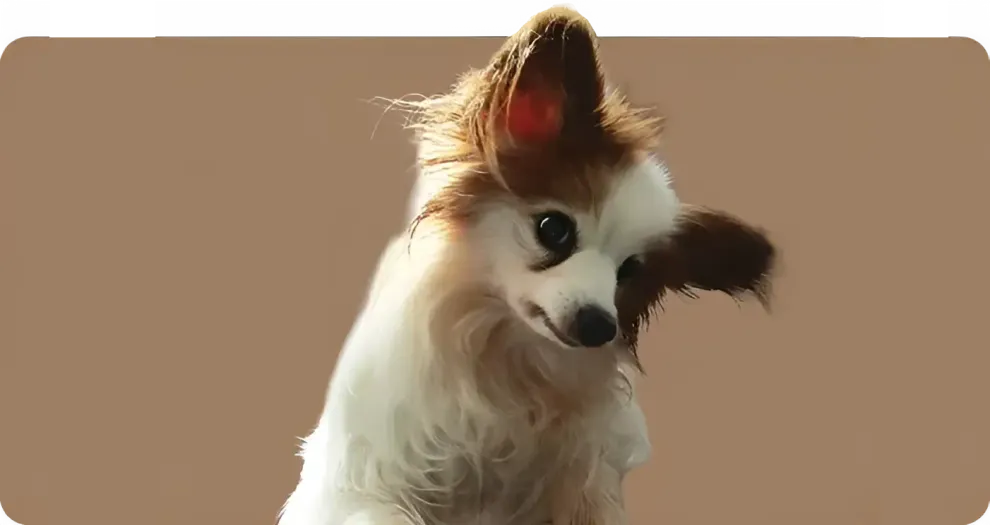
Harry Kelly . . . the precious little boy whose unnecessary, horrifying, and intentional death at Massey University's Companion Animal Hospital on December 1, 2025, gave rise to the founding of IIIVE.
The International Institute for Improvement in Veterinary Ethics was born of a literal horror story, when its founder, Jordan Kelly fiercely protective pet parent of her dearly beloved papillon, Harry (pictured) was the victim of a fraudulent plan and presentation intended to obtain approval for his (unnecessary) “euthanasia”.
As Jordan later learned (albeit too late), Harry had been subjected to multiple instances of malpractice during a night and morning in an ICU ward through (among numerous other practices) repeated, catastrophic overdosing of an unauthorised, specifically contraindicated convenience sedation to, apparently, stop him crying for his owner.
He predictably suffered a massive adverse reaction, which staff did nothing to reverse, and which was then repeated by day shift as opposed to reporting the adverse event and initiating emergency corrective treatment. They instead converted him for use as a student film subject, with students video'ing their cruel, invasive procedures on him - in multiple videos, which the University refuses to release.
ICU Staff Aborted Life-Saving Treatment Due to A ‘Tangled IV Line’
It should be noted that the actual reason for Harry's admission to the facility - New Zealand’s Massey University “Companion Animal Hospital” (which charges premium fees and promotes itself to an international student marketplace) - was a simple, but urgent, rehydration procedure, following heat exposure during a period of extremely high mid-summer temperatures.
Yet even this procedure was lazily abandoned because of a “tangled IV line” (although this might well have been simply a disingenuous excuse for his conversion to experimentation and film subject), while his still dehydrated system struggled as his impaired kidneys tried to process the impact of the convenience-driven. repeated over-sedation with a drug that flew in the face of the strict contraindication warnings that appear in all veterinary research and pharmaceutical literature. The ICU staff had the result of a blood test specifically processed upon his admission that night to check his kidney status, yet chose to recklessly ignore the results right there on their screens, in favour of their own convenience.
Harry was then presented back to his owner (now IIIVE Executive Director, Jordan Kelly) the next day under the pretences of having simply had a natural decline in neurological function . . . although no explanation was or has ever been given as to how this occurred in a 15-hour window. His distraught but intentionally uninformed owner was pressured mercilessly over a two-hour coercive process into his immediate euthanasia under these false pretences.
At no time was it ever disclosed that the true nature of Harry’s massive and unexplained sudden overnight decline was actually not a “decline”; it was the unauthorised, undisclosed and repeated administration of a strong sedative cocktail that his kidneys (the primary means for the excretion of the sedative in question) could not manage.
Highlighting the urgent and enduring need for genuine informed consent at all levels and at all times, sadly and too late, but with burning questions sill in her mind several weeks later, Jordan Kelly put her background as an investigative journalist and consumer affairs writer to work, in an endeavour to find any deeper truths that may have been lurking to explain the many unexplained facets of Harry’s sudden and massive overnight “decline” . . . which had been in no way related to the actual reason for his admission.
A Chance Discovery Revealed that Harry Had NOT Had An Overnight ‘Neurological Decline’; He’d Been Drugged, Literally
Through the chance discovery of an invoice (not handed to her at the time) and her ability to read and understand the consequences of its line items, Jordan realised that Harry had been not only been suffering a massive adverse reaction to the undisclosed and unnecessary sedative administrations on that fateful day . . . but that the sedative in question was same one that Harry had had a severe adverse reaction to just three months prior, when dosed by a local vet at just 25% of the Massey dose (that Massey had then further potentiated and also administered to him in an untreated dehydrated state).
To be further noted: Notwithstanding the contraindicated nature of the drug and the catastrophic levels of the repeated dosings (two only 26 minutes apart), Massey's own recent notes had recorded a previous adverse reaction to their administration of this same drug - and at only a fraction of the levels they had repeatedly dosed him with during the night and then on into the day of his latest - and fatefully, last - admission at the facility.
Jordan Kelly (now IIIVE’s founder and Executive Director) continues in her attempts to seek out Harry’s clinical information and finish piecing together the comprehensive and unredacted facts about what really happened to Harry in that teaching hospital’s ICU ward that night. Massey University’s and the Companion Animal Hospital’s management continue to withhold the unredacted version of Harry’s records, together with six of the eight teaching videos cruelly taken of him while his primary treatment was discontinued - apparently intentionally for his use as a film prop with the intended ultimate fatal consequences.
Massey continues to refuse the release of this information in direct contravention of its obligations under New Zealand legislation for the provision of Harry’s full, unredacted and correct records. Meantime, ICU footage of his “stay” was “overwritten”.
The Need for Information, Informed Consent, Honesty & Ethics . . . and Nowhere More So Than Prior to An Irreversible Decision
Massey management remains unrepentant and in denial of any “non-standard” practices. Massey and the “hospital” management also appears completely unaware of its obligations around disclosure of a pet’s true state at all times, but most especially when pushing for a grave and irreversible decision like the termination of its life.
Footnote: Despite Harry’s little body being sent to a private cremation company in the hope of ensuring that the ashes his owner received back were indeed his, an instruction was apparently given that his owner “didn’t want Harry back”.
The search for what happened to Harry’s ashes, and whether or not the cremation staff’s slip of the tongue regarding his having been “collected with the other post-mortems” is indicative that his body was subjected to an unauthorised post-mortem, continues . . . albeit against a stonewall of total silence from the management of Massey University and its Companion Animal “Hospital”.
It is precisely this horrifying experience - truly the stuff of nightmares - that inspired Executive Director Jordan Kelly to found the
International Institute for Improvement in Veterinary Ethics, with its mission to educate pet owners to avoid anything even approaching this heartrending experience from ever occurring to another pet and his or her loving pet parent.
The Full Horror of What Was Done to Harry Kelly: An Unfolding and Worsening Picture
Since the Institute's founding, the picture of what happened to Harry - and of the institutional architecture that enabled and protected it - has become significantly clearer, and significantly more disturbing.
A formal police report has subsequently been filed under Sections 258 and 260 of the New Zealand Crimes Act 1961, documenting the falsification of Harry's clinical records both before and after his death. The veterinarian subsequently identified as having made the intentionally lethal decisions upon the commencement of day shift and finding Harry in his catastrophically overdosed state, who presented the fabricated terminal diagnosis, and who conducted the coerced termination is one Dr Steffi Maja Jalava, a veterinarian employed at Massey University's Companion Animal Hospital.
The IIIVE continues to work toward the identification and full public disclosure of all other staff involved - both in the fatal handling of Harry and in the subsequent falsification of his veterinary records to obfuscate the process of any future investigation into it.
New Zealand's Ministry of Primary Industries has formally tasked its Animal Welfare Inspectorate with investigating conduct at Massey's Veterinary Teaching Hospital - the first time, to IIIVE's knowledge, that a New Zealand government ministry has intervened at this level in the affairs of a university veterinary facility.
Meantime, the CEO of the Veterinary Council of New Zealand, Iain McLachlan, is under formal investigation by the New Zealand Law Society, following a complaint lodged by IIIVE's Executive Director regarding the VCNZ's non-facilitation of the Harry Kelly complaint and its non-disclosure of its multiple, structural conflicts of interest with Massey University.
The three international accrediting bodies responsible for Massey's triple accreditation - the American Veterinary Medical Association Council on Education, the Royal College of Veterinary Surgeons, and the Australasian Veterinary Boards Council - have all been formally notified of the documented malpractice, the record falsification, and the impending MPI investigation. The veterinary regulatory authorities of Singapore, Malaysia, Hong Kong, and China have similarly been placed formally on notice. The AVMA's response - 93 words dismissing the disclosure - has itself been publicly documented and formally rebutted in a 4,000-word response that is now part of the permanent public record. This is viewable, along with other key correspondence - at the Harry Kelly case page.
Why International 'Accreditations' Are Meaningless As Anything Other Than Marketing & Branding Tools In the Veterinary Teaching Hospital Arena & Cannot Be Trusted by Either Pet Owner-Clients OR Intending Students
The need for pet parent diligence - and for the due diligence of intending veterinary students - has never been more critical and urgent: Many months of evidence-rich correspondence have been sent, along with the provision of the now 50+ dossier of forensically detailed articles across on
The Customer & The Constituent NZ
(with the core case articles also now here on IIIVE), to these three international "accreditation" organisations. They have done nothing - either collectively or individually -and gone out of their way to deflect any and all concerns.
It is imperative that pet owners entrusting their pets to these educational facilities (and that charge as high as, or even higher fees than, any private specialist veterinary facility) understand that these "accreditations" provide
no guarantee of quality or ethical standards whatsoever, and are (in IIIVE's firm opinion) relied on primarily for their value as marketing branding and to maximise the attraction both of domestic and international students to participate in its academic programs. Between the
regulators who refuse to regulate, and the
completely unregulated nature of the veterinary nursing and affiliated fields, these
accreditations provide no guarantee
even of
safe handling of your pet.
By way of the deep structural incestuousness and self-interests of global veterinary accreditation networks, pet parents and intending veterinary students alike should be aware of the following example:
The Dean of the Veterinary Teaching Hospital (aka "Companion Animal Hospital") whose management and staff conducted the intentional catastrophic overdosing of Harry, the covert conversion of him from private property to institutional teaching and film prop status, and the coercion of his owner to consent to his killing under the false pretences of a completely fraudulent diagnosis, is one Jon Huxley.
Huxley — according to his own publicly available Massey University staff biography — "currently sits on the Royal College of Veterinary Surgeons (RCVS) Course Accreditation Visitations Panel." Huxley, therefore, is one of the apparently expert independent auditors sent directly into global veterinary schools to inspect facilities, audit clinical files, interview staff, and evaluate ethical governance. He feeds into the definitive Visitation Report that determines whether a school meets the RCVS's highest standards of clinical execution, operational transparency and ethical integrity . . . the basis upon which the RCVS awards and renews its accreditations.
Yet the very academic and clinical institution presided over by Massey's Dean Jon Huxley is the subject of an intensive and ongoing animal cruelty investigation by New Zealand's Ministry of Primary Industries' complex cases animal welfare unit, continues to redact the identities and roles of all clinical staff involved in Harry's case against all accepted international standards (as expressly acknowledged in writing by the RCVS own Senior Standards and Advice Officer and Solicitor), and whose practice management engages in deceptive billing practices, amongst many other massive ethics and clinical failures, including the deployment of the financially failing University's budget to top-tier external legal counsel in an attempt to silence (in this instance), Harry's owner, IIIVE's Executive Director, Jordan Kelly.
The academic certifying other schools' ethics cannot meet the most basic clinical competencies or ethical standards in his own institution.
Our help in numbers
Countries in which we offer ASD programs to children
57
Volunteers worldwide with ASD rehabilitation training
264
Total number of ASD programs our organization has initiated
103
With as little as US $5/month, you can make a huge impact on a child's life. Your donation will help a child with ASD stay in daycare, receive personal care, food, and enjoy art therapy classes.
Support a child
When you support a program, you support 25 children with ASD and their families. Your donation will help our program run smoothly, and continue to offer rehabilitative help to those who need it.
Support a program
Our top volunteers

Mary Shaw
Fairlawn, New Jersey

Sue Lang
Los Angeles, California
Suzana Müller
Geneva, Switzerland
Laura Costa
Trento, Italy
Our mission
We are committed to helping children with ASD and their families -wherever they are- living their life with as much normalcy as possible.
In addition, we advocate ASD tailored care and education, as the means to achieve great progress and success. Our programs have proven successful in helping children with varying degrees of autism interact and socialize more. We believe there's always hope.